

Read this first
That list is not here to scare you off. It is here because the people who are hurt by kambo are mostly people nobody screened, and because you deserve the full picture before you decide.
What kambo is
Kambo is the waxy secretion on the skin of the giant monkey frog, Phyllomedusa bicolor, which lives in the western Amazon. To collect it, the frog is restrained, its back is scraped and it is released. Peoples of the Brazilian and Peruvian Amazon, among them the Matsés, Katukina and Marubo, have used it for generations, traditionally to clear panema, a run of bad luck in hunting. Its use in cities began in Brazil in the 1990s and has since spread around the world.
The secretion contains more than a hundred peptides. Some act like opioids, some lower blood pressure, and one, phyllocaerulein, triggers the vomiting and sweating. It is not a psychedelic: researchers describe at most mild changes in perception.
How a session works
- The practitioner burns a few small, shallow points into the skin, usually on the arm, leg or chest. In a survey of 386 users the average was about six points.
- A small amount of secretion is placed on the points.
- Within minutes the heart races and most people sweat heavily and vomit.
- For about three quarters of people it is over within 15 to 60 minutes, followed by tiredness and drowsiness.
Many practitioners have people drink a large amount of water first. That step is behind several of the most serious cases, so ask exactly what will be asked of you.
What the research says
There are no clinical trials of kambo. New Zealand's medicines regulator, Medsafe, states that no beneficial effects have been scientifically tested or demonstrated. In the largest survey, most of the 386 users said their wellbeing improved, but they chose to take part and there was no comparison group, so it shows how people felt, not what kambo does. Some of its individual peptides interest researchers studying pain and infection, which is not evidence for the ritual.
Regulators have noticed. Brazil's health agency suspended advertising that claimed therapeutic benefits for kambo in 2004, and Australia banned its supply and use from 1 October 2021.
The documented risks
A 2022 review of 11 published poisoning cases found the same problems again and again:
- Very low blood sodium (hyponatremia), in close to half the cases, linked to drinking large amounts of water. In 2025 doctors reported a woman who was declared brain dead after this.
- Acute kidney failure and muscle breakdown.
- Seizures.
- A torn oesophagus from violent vomiting.
- Toxic hepatitis and psychosis.
A 2025 systematic review, Kambo Administration and Its Association With Sudden Death, describes the few deaths in the medical literature, including a man who died about half an hour after his session. Press reports describe further deaths in Australia, Mexico and the United Kingdom. They are rare against the number of sessions given, and they are not hypothetical.
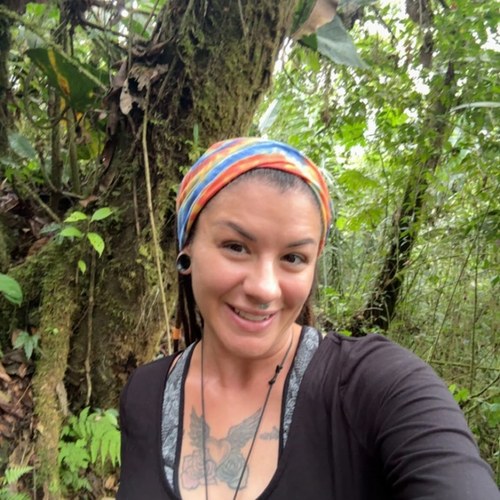
Kambo with Michelle at Portal de Paz
Michelle, a co-founder of Portal de Paz and a kambo facilitator certified in Ecuador, gives sessions one person at a time in a private room, with time to rest afterwards. She talks with you about your health before she agrees to book, and gives you preparation instructions when you do. Besides the conditions above, she screens for breastfeeding, epilepsy, a history of stroke and some medications.
Questions worth asking her, or anyone who offers kambo:
- Where did you train, and how many sessions have you given?
- How much water will you ask me to drink, and how do you watch for low sodium?
- How many points do you start with for a first session?
- What do you do if I faint or react badly, and how far is the nearest clinic?