



What happens on a meditation retreat
You sit, mostly. Periods of sitting meditation, usually somewhere between half an hour and an hour, alternate with slow walking meditation so your legs and back get a break. The teacher gives instructions at the start and a talk most evenings, and there is time to ask about what is happening in your practice, in a group or one to one.
Meals are simple and often vegetarian. Many retreats keep silence for some or all of the time, which removes the effort of small talk and leaves more attention for the practice. Some ask everyone to help with a chore, such as washing up, as part of the day.
By the second or third day most people notice how busy their mind is. That is not a sign of doing it wrong. Noticing it is the practice.
Kinds of meditation retreat
- Vipassana courses in the tradition taught by S. N. Goenka: ten days, silent, the same timetable worldwide.
- Insight and mindfulness retreats from other Buddhist lineages, and Zen retreats (sesshin), each with its own forms.
- Secular mindfulness weekends, closer to a course than a monastery, often with more talking and explanation.
- Retreats that mix meditation with yoga, breathwork or time outdoors, common in the cloud forest and on the coast.
Shorter retreats sometimes borrow the word "Vipassana" without being Goenka courses. Neither is better; ask which tradition a retreat comes from so you know what you are signing up for.
What a Vipassana course asks of you
The ten-day courses described on dhamma.org follow one code of discipline everywhere. Counting arrival and departure, a course takes twelve days, and you agree to stay for all of it.
- Noble Silence from the start until the morning of the last full day: no talking with other students, and no gestures or notes either. You can speak with the teacher and the course managers.
- No reading, no writing, no phone: devices are handed in until the course ends.
- Five precepts: no killing, stealing, sexual activity, lying or intoxicants.
- A bell before dawn and a timetable with about ten and a half hours of meditation a day.
That is what people mean by the ten-day rule: you commit to the whole course and its silence before you arrive. The courses charge no fee. They run on donations, which only students who have finished a course may give, and the teachers are not paid. Check dhamma.org for courses in Ecuador and nearby countries.
Is it hard?
Often, yes. Knees and backs complain. Boredom and restlessness are common, and so are surprising waves of emotion. A weekend retreat with breaks and talking is a gentler first step than ten silent days.
For most people the difficulty is ordinary and passes. Not always: a 2017 study in PLOS ONE (Lindahl and colleagues) interviewed Western Buddhist meditators and their teachers and catalogued 59 kinds of experience, some of them distressing, such as fear, anxiety or changes in perception, that sometimes lasted after the retreat.
Are meditation retreats worth it?
The research on meditation is better than the marketing suggests and smaller than it claims. A 2014 review in JAMA Internal Medicine (Goyal and colleagues) pooled 47 trials with 3,515 people and found moderate evidence that mindfulness programs ease anxiety, depression and pain, and no evidence that they beat other active treatments. Those were mostly eight-week programs, not retreats.
What a retreat adds is time. Many people find a few days of sustained practice teaches them more than months of ten minutes a day, and they go home with a practice they keep. Some don't. It is worth trying a class or a weekend first.
How to choose a meditation retreat
- Which tradition, and who teaches it? Ask where the teacher trained and for how long.
- How many hours of sitting a day, and is there walking practice between?
- Silent or not, and for how much of it?
- Can you talk to the teacher, alone, during the retreat?
- Is it suitable for a first retreat?
- What is included, and what happens if you need to leave early?
Goenka courses are free, as above. Other retreats price mostly by lodging and length; each one listed on this page gives its own price and what it includes.
Meditating in the cloud forest
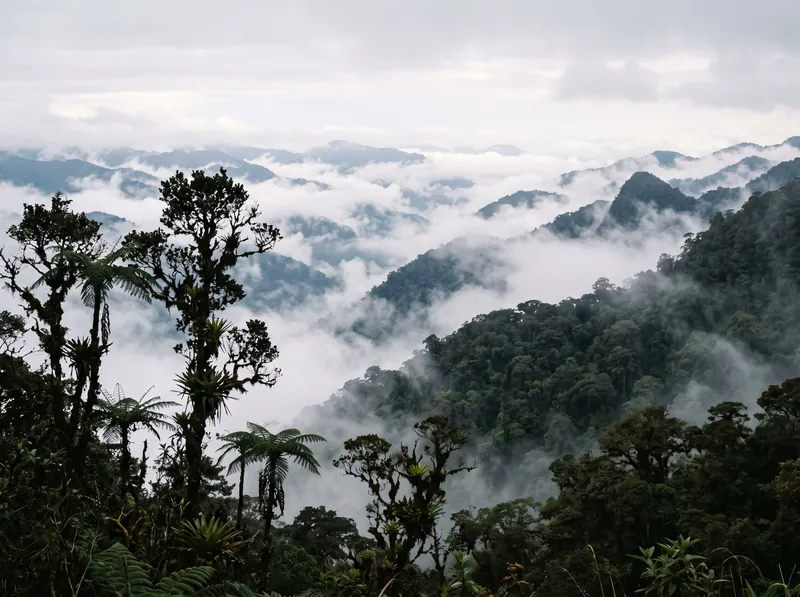
Mindo sits at about 1,250 metres in a valley on the western slope of the Andes, inside the Chocó Andino de Pichincha Biosphere Reserve. The day here has its own timetable: birds from before dawn, clear mornings, and rain on the roof most afternoons, which turns out to be a good thing to sit with.
Meditation in Mindo →Silent retreats →All retreats in Ecuador →Mindo travel guide →
Practical
- Mindo is at about 1,250 m on the western slope of the Andes, two hours by road from Quito.
- Days are mild, nights are cool, and it rains most afternoons.
- Flor del Valle runs direct buses from Quito's La Ofelia terminal, with tickets sold on the day. Ask the organizer whether a transfer is included, or read getting to Mindo from Quito.
- Bring layers, a rain jacket and shoes that can get muddy. The Mindo packing list has the rest.