


What happens when nobody talks
The silence usually starts on the first evening, after the introductions. From then on you don't speak to the other participants: not at meals, not on the paths, not in the room you share. The teacher still talks, giving instructions and an evening talk, and you can go to them or to the staff with a question or a problem.
The first day is strange. People notice how much of a meal goes on conversation, how loud a spoon is, how often they reach for a phone that isn't there. By the second or third day most stop missing it. What is left is the practice, which on most silent retreats means meditation, sitting and walking, sometimes with yoga, and a lot of ordinary things done slowly: eating, washing, walking to the river.
Silence ends with a session for talking again, and most people are surprised how tiring an hour of conversation is after it.
The usual rules
Every retreat sets its own, but most of them are some version of these:
- No talking with other participants, and often no gestures, notes or eye contact either.
- Phones off or handed in for the whole retreat.
- Often no reading or writing, though some retreats allow a journal.
- No alcohol or other intoxicants.
- Stay on the grounds, or on the walks the retreat sets.
- In an emergency you speak, and the staff will always answer.
The ten-day Vipassana courses keep the strictest version, set out on our meditation retreats page.
Different kinds of silent retreat
- Buddhist meditation retreats, Vipassana and Zen among them, where silence is part of the method.
- Christian silent retreats, such as the Spiritual Exercises of Saint Ignatius, often made over eight days, or thirty for the full Exercises. In Ecuador these are run by religious orders and are not listed here.
- Yoga retreats with silent mornings or silent days, where the evenings stay social.
- Self-guided retreats: a room or a cabin, meals brought to you, and your own timetable.
How long they last
A weekend, two nights, is the usual first try, and from Quito it needs no time off work: two hours each way to Mindo. Three to five days is long enough for the strangeness to pass and the quiet to settle. Seven to ten days is for people who already know they like it, or who want the full Vipassana course.
Is a silent retreat healthy?
For most people it is rest: no small talk, no messages, regular meals and early nights. What people report afterwards is mostly this: hearing their own thoughts clearly for the first time in a while, noticing habits they had stopped seeing, and sleeping better.
Silence also removes the usual distractions from whatever is difficult. Long, intensive meditation in silence can bring up fear, anxiety or old memories, and for a few people those don't settle when the retreat ends. The research on this is summarised on our meditation retreats page.
What to bring
- Layers and a rain jacket. In Mindo mornings are usually clear, afternoons usually wet and nights cool.
- Shoes you can slip on and off, for meditation rooms.
- A shawl or blanket for sitting, and anything your back likes to lean on.
- Earplugs, if you share a room.
- Your medication, and a note on it for the organizer.
- Cash: the ATM in the centre of Mindo is sometimes out of service.
- A message, sent before you arrive, telling the people who might worry that you will be offline.
How to choose a silent retreat
- How silent: all of it, the mornings, or the practice hours only?
- What fills the day, hour by hour, and who teaches it?
- Is it suitable for a first silent retreat?
- Can you speak to the teacher, privately, if you need to?
- What is included, and what happens if you need to leave?
Prices follow the lodging and the length. Each silent retreat listed on this page gives its own price and what it includes.
Silence in the cloud forest
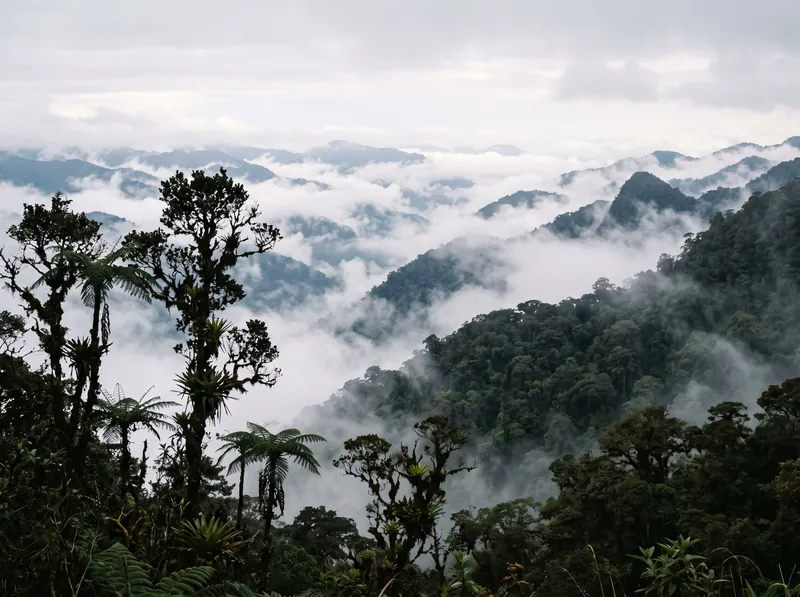
Mindo is a small town at about 1,250 metres inside the Chocó Andino de Pichincha Biosphere Reserve. Silence here is never quite silent: the birds start before dawn, the river runs all night and the rain arrives most afternoons. Most people find that easier to sit with than a quiet room in a city.
Meditation in Mindo →All retreats in Ecuador →Mindo travel guide →
Practical
- Mindo is at about 1,250 m on the western slope of the Andes, two hours by road from Quito.
- Days are mild, nights are cool, and it rains most afternoons.
- Flor del Valle runs direct buses from Quito's La Ofelia terminal, with tickets sold on the day. Ask the organizer whether a transfer is included, or read getting to Mindo from Quito.
- Bring layers, a rain jacket and shoes that can get muddy. The Mindo packing list has the rest.