


What a training retreat adds
Reiki is often taught in a city over a weekend, with the students going home each night. A training retreat puts the same course in one place for several days. The difference sounds small and isn't.
You practise more. Treating each other morning and evening, and treating yourself before breakfast, adds up to many more hours with your hands on someone than a weekend course leaves room for. You also have time between sessions to notice what changed, write it down, and ask about it the next morning instead of a month later.
And you are away from the things that usually crowd a new practice out. In Mindo that means a quiet valley, rain on the roof most afternoons, and nothing more pressing to do than the next session.
The levels, briefly
Usui Reiki, the most widespread form, is taught in levels: the first for treating yourself and people close to you, the second for structured sessions with others, and a master level for deepening your own practice and, in many lineages, teaching. Each level includes an attunement, a short ritual in which the teacher passes Reiki on to the student.
Our Reiki training page explains the levels, the attunement and what a certificate means in more detail, so this page doesn't repeat it.
The five principles
Mikao Usui, who began teaching Reiki in Japan in the early 1920s, gave his students five principles to say morning and evening. Translations vary; the sense is this:
- Just for today, do not be angry.
- Do not worry.
- Be grateful.
- Do your work honestly.
- Be kind to others.
"Just for today" carries the weight. Nobody is asked to stop worrying for good, only until tonight. On a retreat you say them together at the start of the day, which is the first time many students take them as something to practise rather than a poster.
What Reiki can claim, and what it can't
Whether Reiki works depends on what you ask of it. Most people describe a session as deeply relaxing: an hour lying still, fully clothed, with warm hands resting on them. That part is not in dispute.
Claims beyond it are thin. A 2015 Cochrane review of Reiki for anxiety and depression (Joyce and Herbison) found only three trials that met its criteria, with 62 people in the relevant groups between them, and concluded there was not enough evidence to say whether it helps. That is not proof that it fails. It is a reason to be wary of any teacher who promises it cures something.
The real negatives are practical. Reiki is not regulated, so a certificate means what the teacher behind it means. Courses that sell all three levels in an afternoon online are common. And the one serious risk is using Reiki in place of medical care.
Why people feel strange afterwards
After a session or an attunement some people feel light-headed, sleepy, unusually emotional or simply odd for a few hours. There are ordinary explanations: lying still for a long time lowers your blood pressure, standing up too fast after it makes you dizzy, and a quiet hour of attention brings up whatever you had been too busy to feel.
On a training retreat you give and receive several sessions a day, so expect some of this. Get up slowly, drink water, eat something, and leave the evening light. If you feel unwell in a way that doesn't pass, treat it as you would anywhere else and see a doctor.
How to choose a Reiki training
- Which levels does it cover, and which lineage does it come from?
- How many hours of practice with supervision, and on whom: each other only, or people from outside the group too?
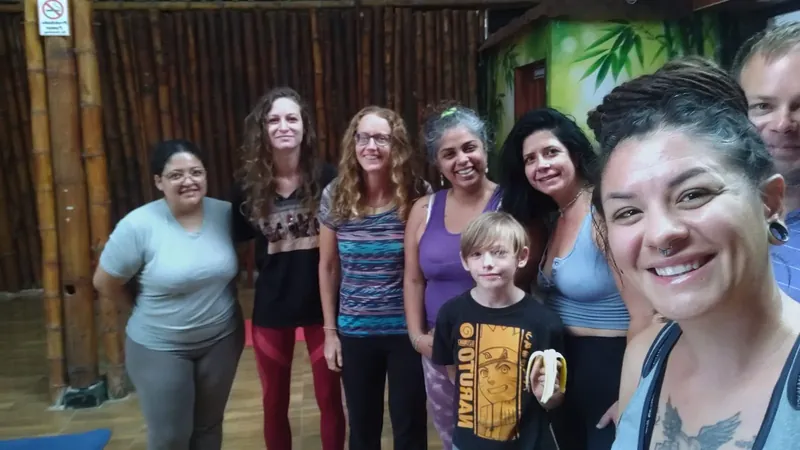
- How many students? With a large group the teacher cannot watch your hands.
- What does the certificate say, and what support is there afterwards when questions come up?
- Where do you sleep and eat, and what does the price include?
What a training costs depends on how many levels it covers, how many days it runs and whether lodging and meals are in it. Each listing on this page gives its own price and what it includes. A Reiki session on its own is priced separately, by the person who gives it.
Training in Mindo
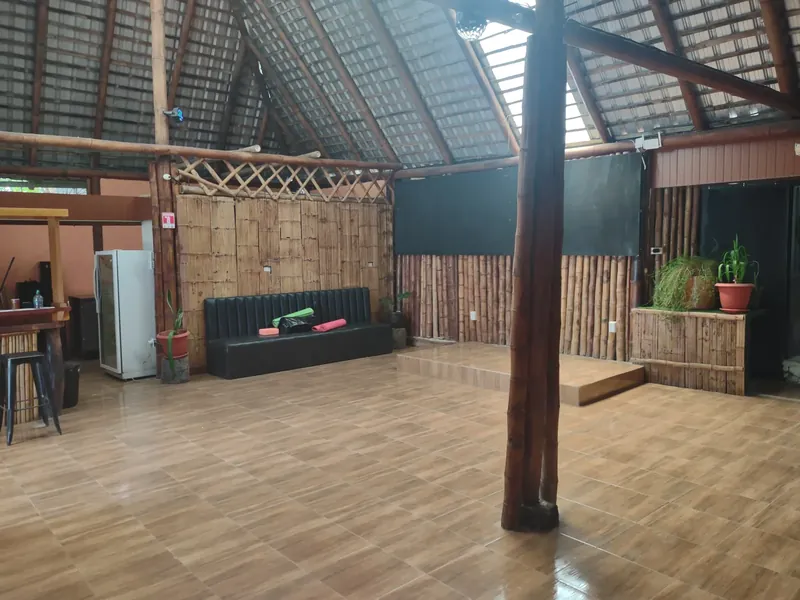
Mindo is a small town in a valley on the western slope of the Andes, at about 1,250 metres, inside the Chocó Andino biosphere reserve. A Reiki training here may meet in the bamboo hall at Portal de Paz near the park, or at a lodge outside town; each listing says where.
Coming for a training is an easy reason to stay a few extra days for the birds and the waterfalls.
Reiki sessions in Mindo →All retreats in Ecuador →Mindo travel guide →
Practical
- Mindo is at about 1,250 m on the western slope of the Andes, two hours by road from Quito.
- Days are mild, nights are cool, and it rains most afternoons.
- Flor del Valle runs direct buses from Quito's La Ofelia terminal, with tickets sold on the day. Ask the organizer whether a transfer is included, or read getting to Mindo from Quito.
- Bring layers, a rain jacket and shoes that can get muddy. The Mindo packing list has the rest.